Website designed with the B12 website builder. Create your own website today.
Start for free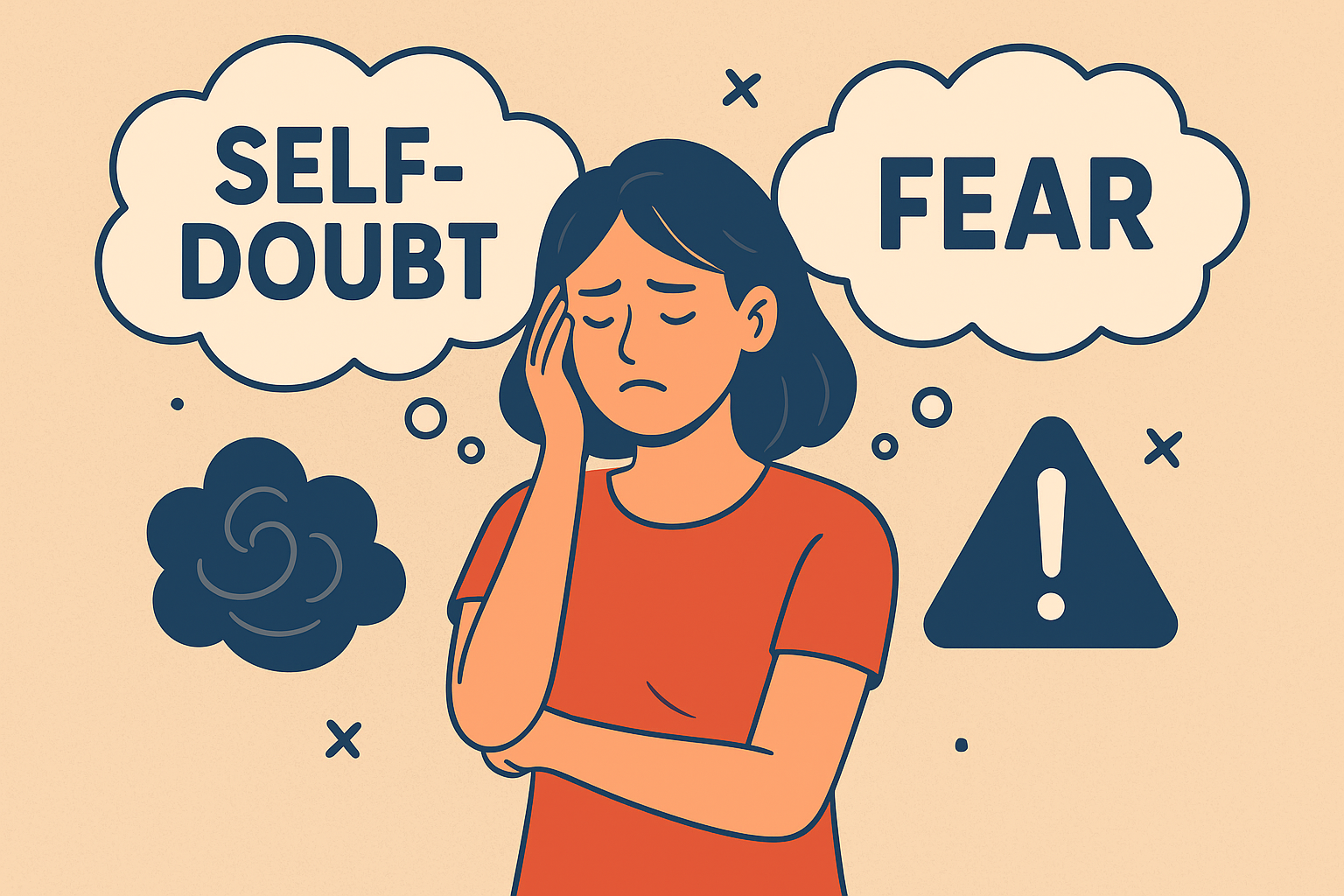
Most self-doubt comes from past failures, negative self-talk, or comparing yourself to others. The first step is awareness. Ask: Where is this fear coming from? Once you pinpoint the trigger, you can address it directly instead of letting it control you.
👉 Action Steps:
📌 Why it works: Awareness is power. When you know where doubt comes from, you can stop reacting blindly and start responding with intention.
The voice in your head matters. Replace “I’m not good enough” with “I’m still learning, and that’s okay.” Positive self-talk isn’t about blind optimism—it’s about training your brain to see opportunities instead of obstacles.
👉 Action Steps:
📌 Why it works: Your brain believes what you repeat often. Shifting language from criticism to encouragement rewires your mindset.
Confidence builds through action. Break big goals into smaller steps and tackle them one by one. Each small win chips away at fear and reinforces the belief that you can do it.
👉 Action Steps:
📌 Why it works: Confidence doesn’t appear out of thin air. It’s built through repeated action, one step at a time.
Comparison feeds insecurity. Remember, social media shows highlights, not struggles. Focus on your own progress—measure today against yesterday, not against someone else’s journey.
👉 Action Steps:
📌 Why it works: Shifting focus from others back to yourself helps you appreciate your journey without constant comparison.
Fear often comes from the possibility of failure. Shift your mindset: failure isn’t the end, it’s feedback. Every mistake teaches you what to do better next time.
👉 Action Steps:
📌 Why it works: Fear loses its grip when failure becomes feedback instead of final judgment.
The people around you influence your mindset. Stay close to those who encourage you and distance yourself from constant critics. Positive energy builds resilience.
👉 Action Steps:
📌 Why it works: The energy of the people around you directly affects your mindset. Supportive environments fuel growth.
Beating yourself up for feeling fear only makes it worse. Treat yourself the way you’d treat a friend—kindly, with patience and understanding. Confidence thrives when you give yourself permission to grow.
👉 Action Steps:
📌 Why it works: Self-compassion lowers anxiety, reduces fear, and builds resilience. Confidence grows when you treat yourself as an ally instead of an enemy.
Overcoming self-doubt and fear isn’t about never feeling them again. It’s about learning how to act despite them. By journaling triggers, reframing thoughts, taking small steps, and practicing self-compassion, you can shift from hesitation to action.
Remember: You don’t need to be fearless—you just need to keep moving forward with courage.
Self-doubt often comes from past failures, negative self-talk, fear of judgment, or constant comparison to others. It’s also linked to perfectionism—when you feel nothing you do is ever “good enough.”
Yes. Fear is a natural survival mechanism. It alerts you to danger and pushes you to prepare. The key is learning to distinguish between real threats (like unsafe situations) and imaginary ones (fear of failure or rejection).
Confidence builds over time, but quick wins help. Start small—speak up in a meeting, complete a task you’ve been avoiding, or try something new outside your comfort zone. Each action proves to yourself that you’re capable.
Fear is usually tied to a specific situation (public speaking, trying something new). Anxiety is more general and often lingers without a clear cause. Both can trigger self-doubt, but strategies like mindfulness and small action steps can help with both.
Self-doubt isn’t something you “fix” once and for all—it comes back in new situations. The key is building resilience: remind yourself of past wins, lean on your support system, and revisit your action steps when needed.